

October 4th 2017
Neuroscience Graduate Mallory Durran talks mirror neurons, internal and external cuing in dance and the value of the collective:
October 4th 2017
Educational researchers have suggested that teachers may be able to help students learn to manage their self-efficacy beliefs, which can in turn positively influence persistence, self-regulation, and subsequent task-based achievement (Bandura, 1997; Pajares & Urdan, 2006; Zimmerman, 2000). A sense of self-efficacy, or belief in one’s ability to accomplish a specific task, motivates individuals to persist despite setbacks, become more actively involved in a task, and work harder and longer toward attainment (Bandura, 1997, 2012).
October 3rd 2017
To date, neuroscience research in this area has identified shared neural networks whereby we process another’s action, emotion or sensation through overlapping brain regions as if we were carrying out that same action or experiencing that same emotion or sensation. Intriguingly, this research has shown that such vicarious activation of brain networks can span from an automatic and unconscious process through to an overt experience of the emotion or sensation of that observed in another person.
July 6th 2017
The confidence of grand gestures seems alien to me now. I’m interested in the personal gesture, contact, vulnerability. I want to make space, not take it. Isabel spoke about the intimacy of the artistic and human experiences she shared with her father in his final, confined years, and I saw how Hamlet might be bounded in a nutshell and yet count himself a king of infinite space. This art is invisible. It exists only in a meeting of minds. You have to be present, not observing but participating.
Francois Matarasso, July 4, 2017
May 25th 2017
Thinking about the various ways to use imagery to inspire intimate movement exploration with dancers with Parkinson’s…
Considering this in relation to fragmentation, and internally motivated movement techniques through imagery:
Dynamic Neurocognitive Imagery (Eric Franklin)
DNI uses progressive movement exercises combined with various methods of imagery to draw participants’ attention to anatomical structures and locations, body biomechanics, as well as spatial and functional relationships between body segments during movement.
https://franklinmethod.com/about/
Franklin’s description of imagery refers to three main categories
1. Anatomical and Kinetic
2. Metaphorical
3. Tactile
A 2012 research study into the different effects of these imagery styles on execution of a ballet step found that the anatomical imagery proved most effective. Additionally an interesting finding demonstrated that learning style did not necessarily correlate to the style of imagery that work best for performance enhancement.
https://franklinmethod.com/wp-content/uploads/2017/01/heiland-plie-arabesque-20123.pdf
May 23rd 2017
Mirror Neurons and Empathy:
https://www.ted.com/talks/jeremy_rifkin_on_the_empathic_civilization
May 20th 2017
Seeing another person doing a movement can activate the brain to initiate movement: the mirror system is a neurological process which involves the preparation our brain makes to take an action. By seeing another person doing a movement our brains prepare to take this action ourselves.
Dynamic movement cues obtained from observing and imitating actions may be more effective than other forms of cueing, and recent studies have indicated some benefits of imitation practice within rehabilitation programmes for stroke and Parkinson’s
http://beamlab.lab.ls.manchester.ac.uk/research/parkinsonsdisease/ (2017) [20/05/2017]
May 11th 2017
Considering the body and the universe…
“step with me into the boundlessness, where constancy, quietude, and peace, infinite emptiness reign…”
May 5th 2017
Further research on the representation and fragmentation of the body through film
March 10th 2017
Reflecting on the work in process film ‘Collective Field 2017’…
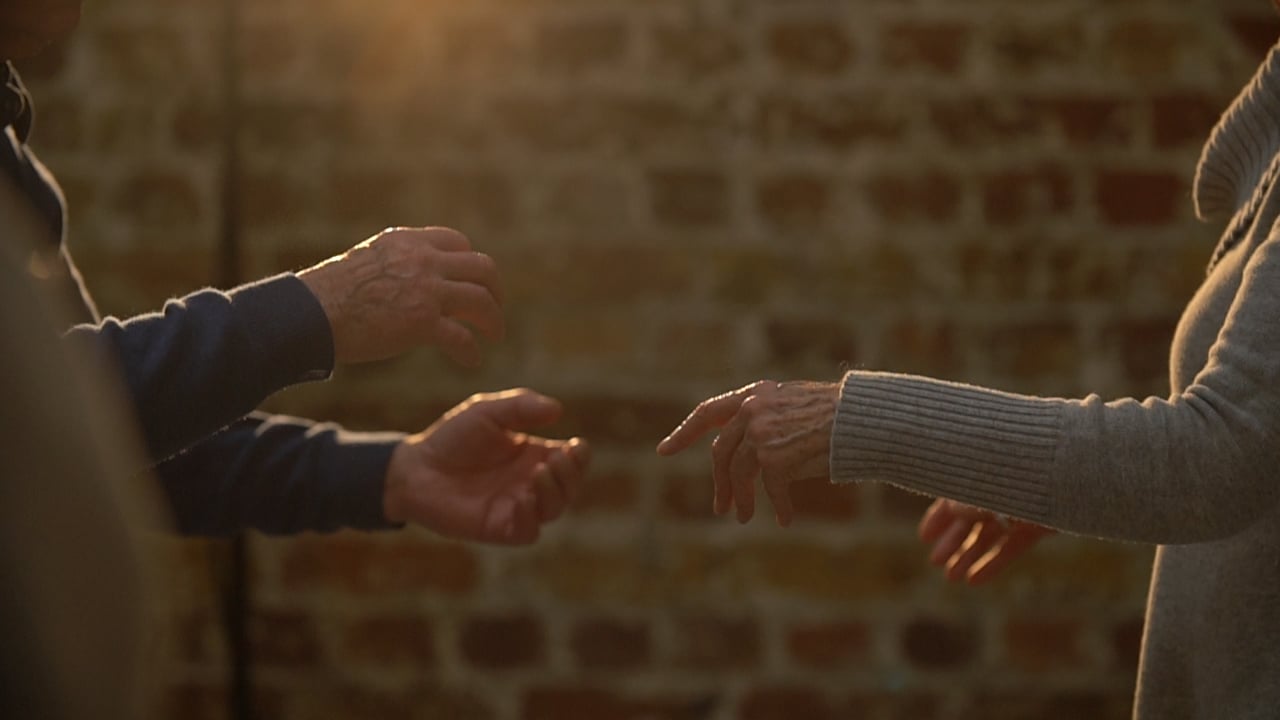
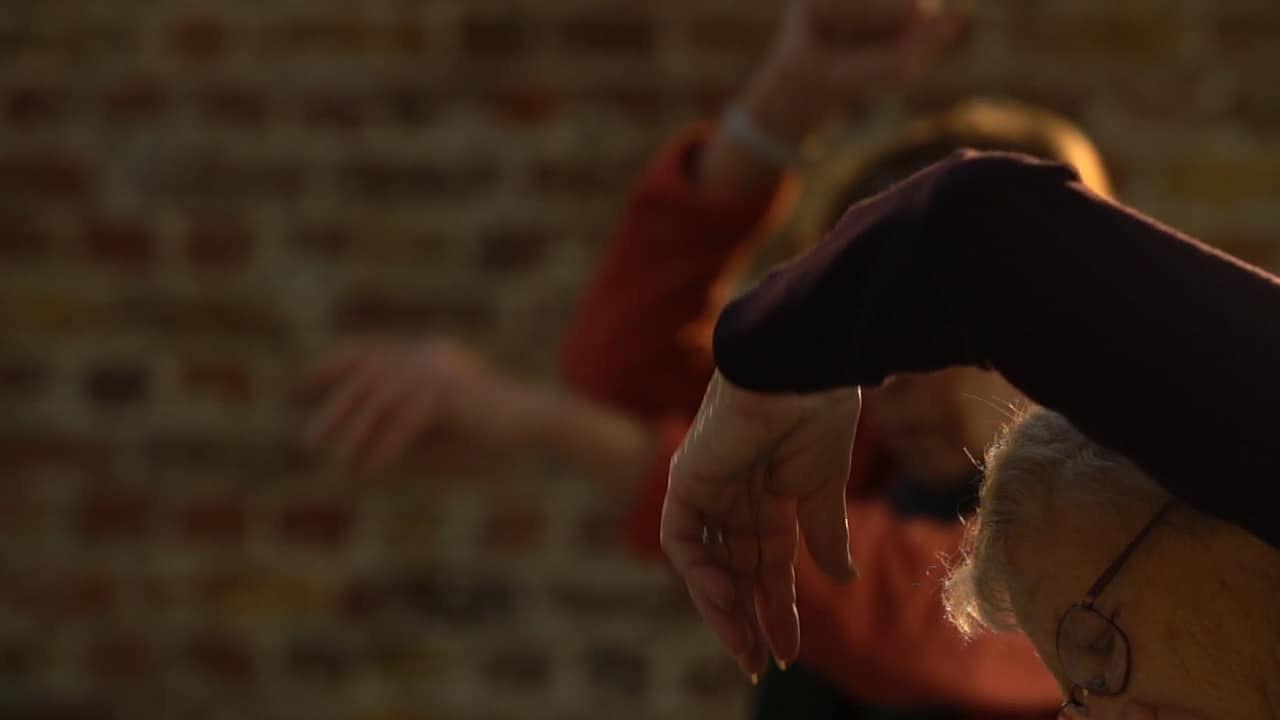
Working with film in this process has highlighted the value of fragmentation of the body for enabling alternative ways of seeing, and ways of initiating movement. The gaze of the camera, directed by Sara Hibbert, drew me to different body parts and how the movement stems from the core of the body; as opposed to seeing the traces of movement in the space made by the limbs of the dancers.
Initiating movement in an intimate space individually was difficult for dancers in this process, perhaps due to:
- the challenge of imagining ways to move
- over reliance on a sense of aesthetics in movement from an external perspective (shapes in space)
- their previous experience of dance being delivered using external cuing such as use of mirroring or music cues meaning dancers are reliant on being guided to move
However the fragmenting of the body in ‘Collective Field 2017’ shows rich movement exploration starting from the core of the body.
This perspective of the body through the camera lens, has directed me to consider internally guided movement methods in order to encourage bodily understanding and awareness for dancers with Parkinson’s. Dance involves considering the movement of the body in space, in relation to itself, externally and internally, however perhaps over reliance on external cues could hinder dancers creative understanding of their body’s potential to move…
March 5th 2017


March 2nd 2017
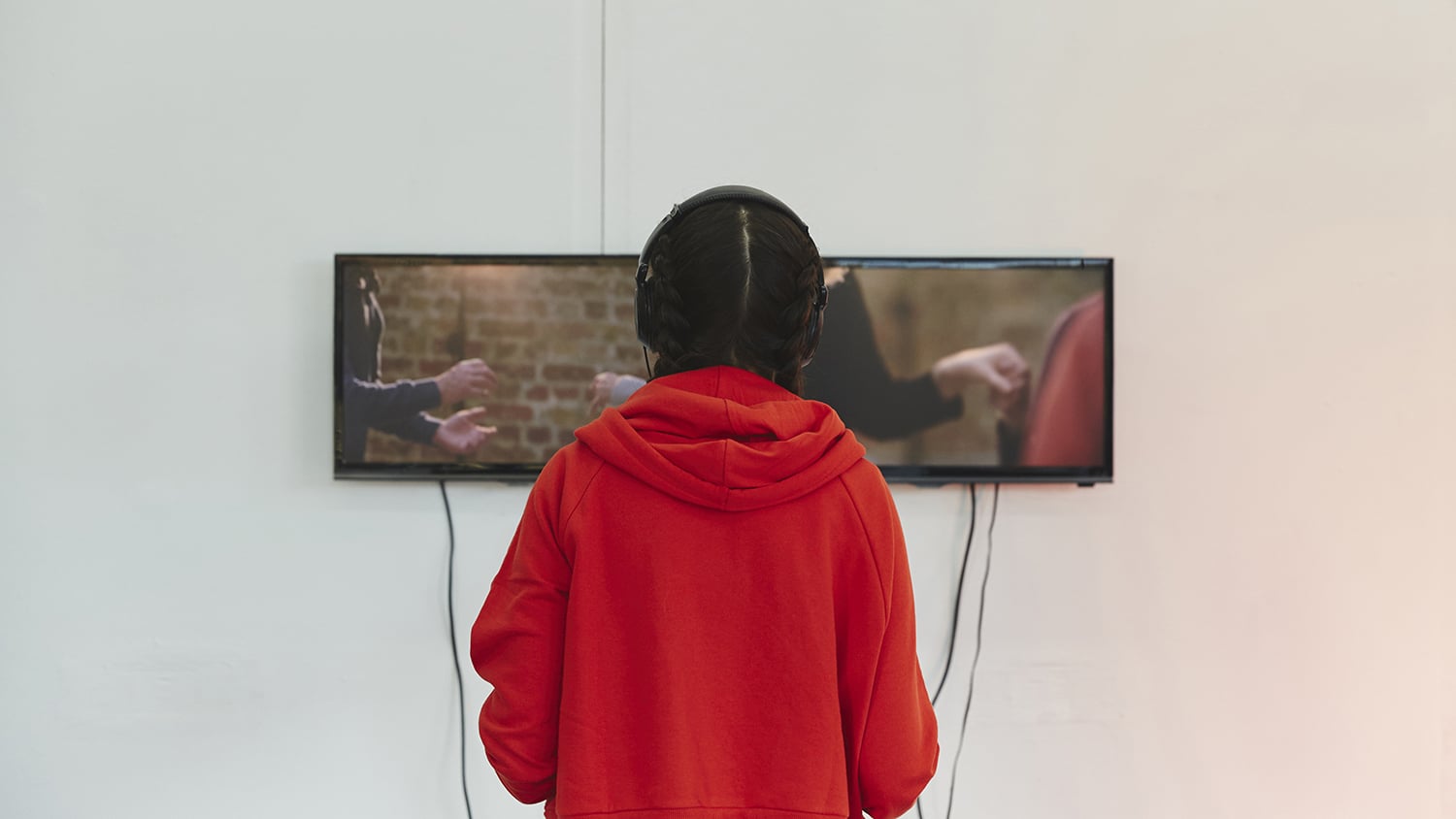
‘Collective Field’ (2017) is the artistic response to the Collectivity & Intimacy dance practice as research project; a 15 minute split screen film installation directed by artist Sara Hibbert. Collective Field was recently shown in Altai; Experiments in Collective Practice, a series of happenings exploring shared space and knowledge exchange. The work acts as a chapter in our continuing research, and has enabled us to explore specific ideas such as what it means to move collectively, moving in silence, and viewing the body from new perspectives through the filmmaking process.
Install:
February 12th 2017
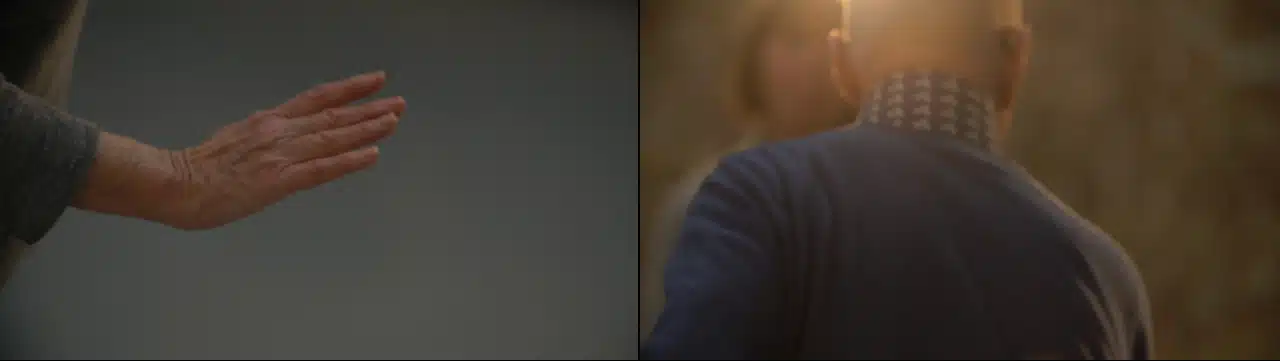
The Collective Field (work in progress) will be exhibited this week as part of Altai in Residence; Experiments in Collective Practice at the Dyson Gallery, Royal College of Art, Battersea.
Open 14th – 18th Feb
10am – 5pm (12-5pm Sat).
The work-in-progress has been made in collaboration with dancers from Musical Moving, dance for people with Parkinson’s (Wimbledon), and Dancing with Parkinson’s, St. Josephs Hospice (Hackney), with special thanks to dancers:
Susan Prag
Jill Pal
Nancy Williams
Noelle Dyer
Olive Hodgins
Fred Hodgins
More information about Altai in Residence and other artists involved in the programme can be found here.
February 7th 2017
Today we explored the collective and intimate spaces created both in the body and the external environment, through the guidance of music or the openness of silence.
We experimented with the exposure that we feel when dancing with no music to support us and drive our intention.
It is a common experience in dance sessions with people with Parkinson’s that music choices are made in a supportive and intentional way in order to enable the dancer to achieve maximum potential in movement – amplitude, strength, stability and fluidity of the body. These things are fueled by a drive to achieve benefits to bodily mechanics. From an aesthetic or externally driven place.
In this workshop we experienced the space to drive the movement from the internal environment and to consider movement choices from bodily suggestion rather than from the external impetus of music or accompaniment.
What we observed was a lived or phenomenological experience – somewhere between active expression and passive embodiment.
What the dancers experienced was something on the border between freedom and discomfort.
More soon…
February 6th 2017
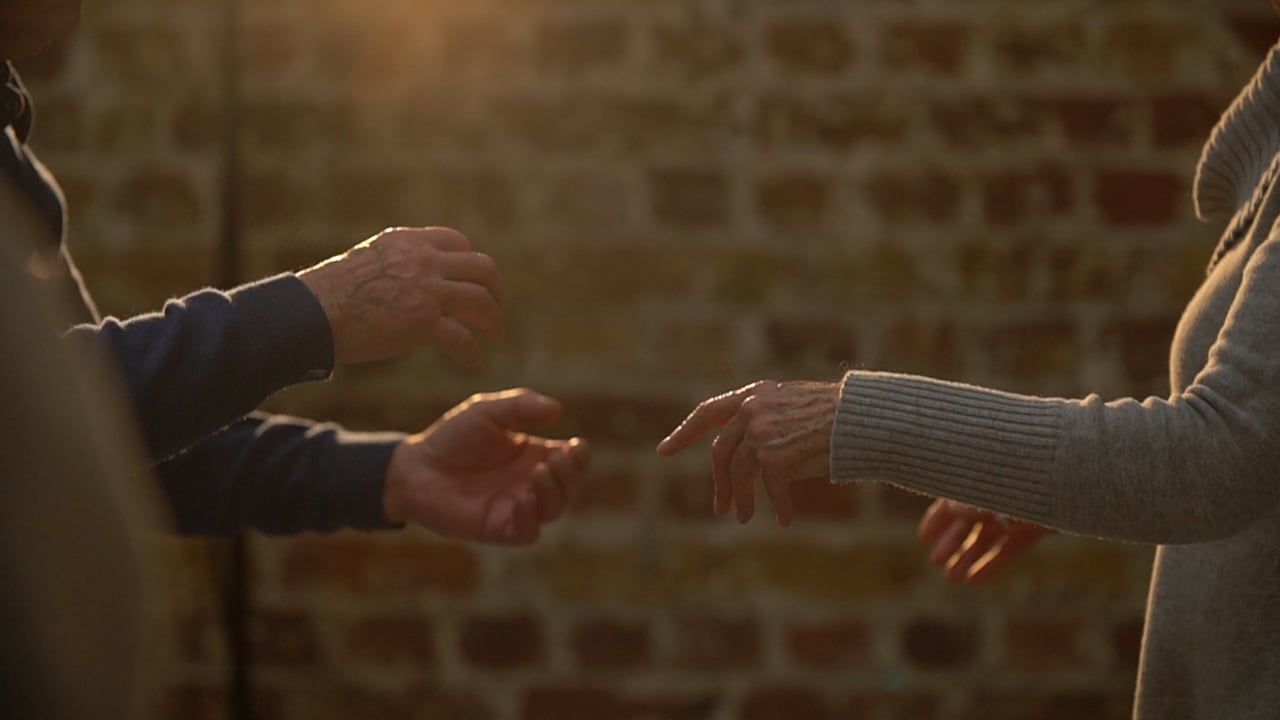
A still from today’s filming session… more to come
February 2nd 2017
Researching collectivity and intimacy:
Jamie xx ‘Sleep Sound’: Collectivity within the intimate space of silence…
shared sound, shared silence, shared movement
January 31st 2017
ociology Guide on collective behaviour:
Collective behaviour describes the actions, thoughts and feelings of a relatively temporary and unstructured group of people. In contrast, a social movement is a large ongoing group of people engaged in organised behaviour
sociologyguide.com (2017), [11/05/2017]
January 23rd 2017
Fragments of movement, cropping of space; exploring how the editing process presents new viewpoints on the moving body…
January 6th 2017
An interesting first R&D workshop for our collective research and some themes have arisen to inspire our next session.
- Identity – what frame of reference do we have to discover value in our contribution when we are struggling with a shift in sense of self due to a long term health condition?
- What is the value of bringing Parkinson’s into the forefront and not leaving it at the door?
- Given these considerations, how do we enable people to understand their unique value and potential as movers beyond the confines of their sense of self as associated with Parkinson’s?
- Is this a rediscovery of self or a discovery of a new self?
- Does the fragmentation of the body help people to see themselves through a different lens rather than considering the body as a whole?
- Does fragmentation cause a sense of separation?
Food for thought…
January 4th 2017
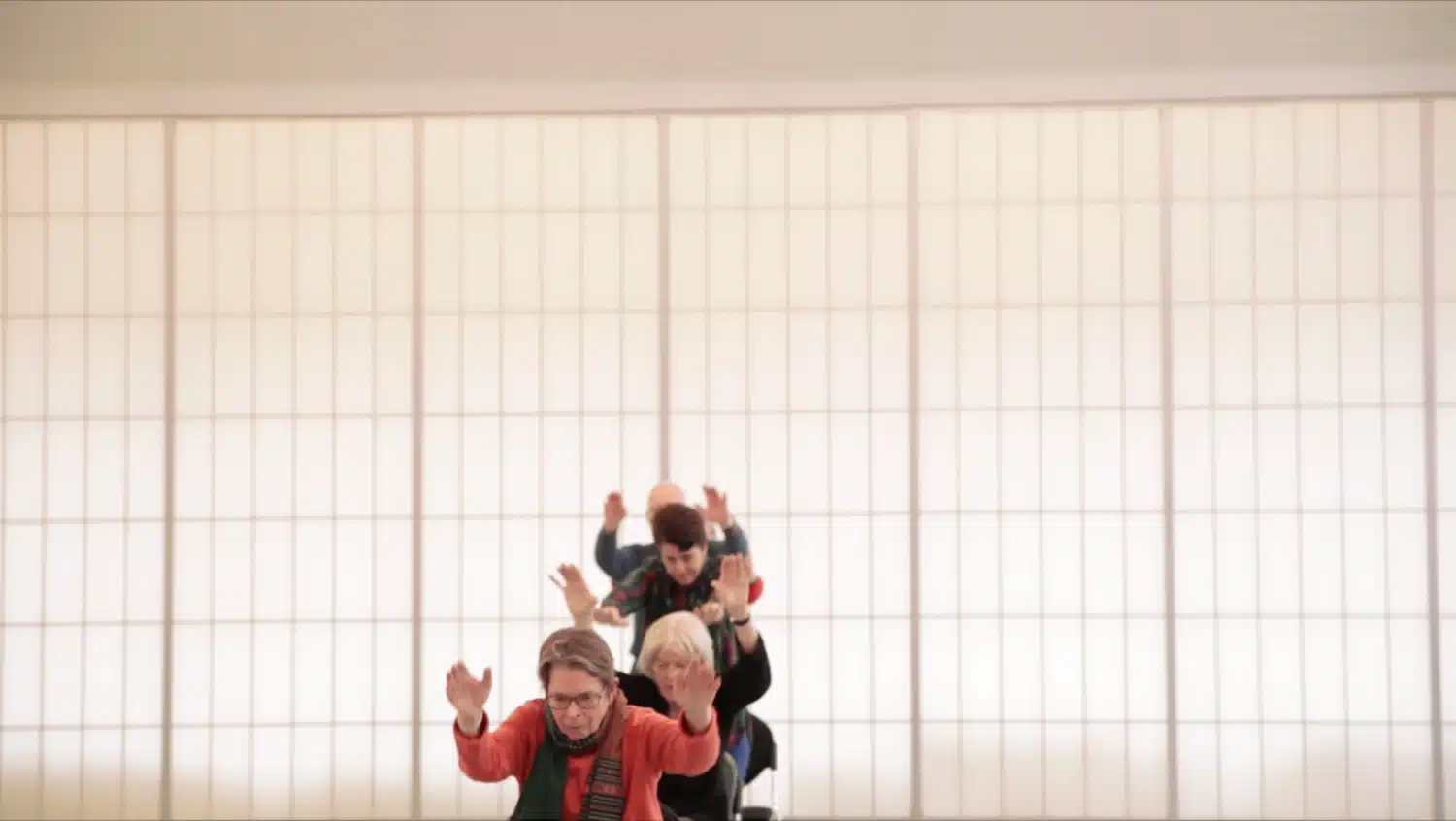
Exploring a workshop – focussing on ideas around repetition and mirroring, moving as a collective and as individual, and defining the meaning of personal signature.